Archivo de la categoría: Publications

New chapter published

Sustainability and resilience in tourism through carbon footprint assessment

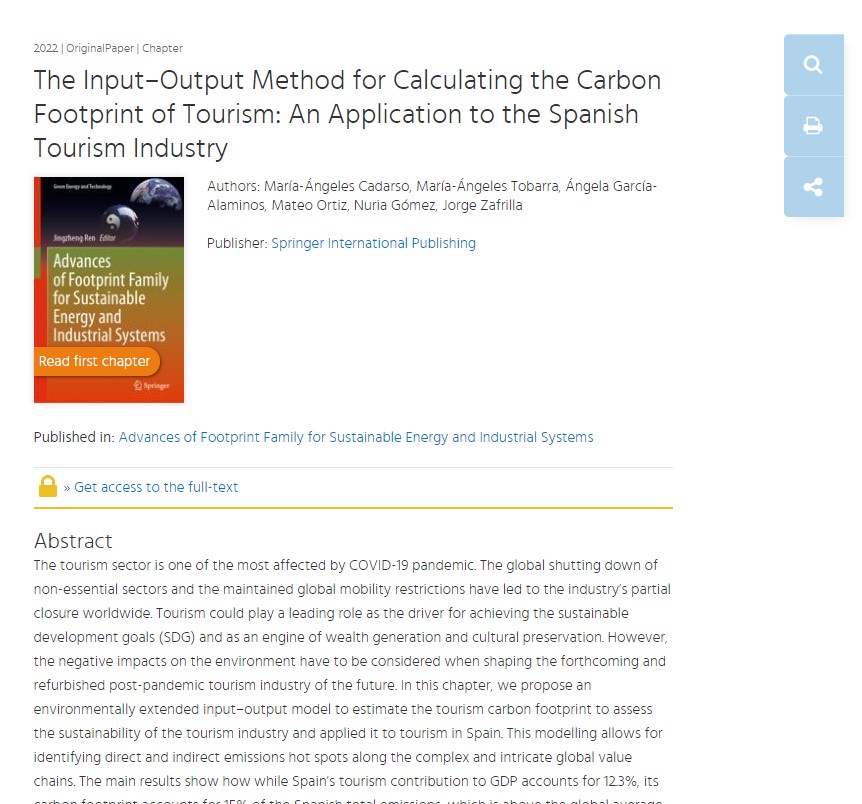
GEAR Members María Ángeles Cadarso, María Ángeles Tobarra, Ángela García-Alaminos, Mateo Ortiz, Nuria Gómez, and Jorge Zafrilla have recently published a new book chapter entitled “The Input–Output Method for Calculating the Carbon Footprint of Tourism: An Application to the Spanish Tourism Industry” inside the book Advances of Footprint Family for Sustainable Energy and Industrial Systems, edited by  J. Ren in the Green Energy and Technology Series in Springer International Publishing.

Tourism is an activity that represents a high share in GDP and employment in developed economies as the Spanish one (in which tourism contribution to GDP accounts for 12.3%), but also in developing areas. However, the sustainability of such activity is controversial because it is highly pollutant given its transport dependency. The pandemic crisis has struck tourism heavily, showing its high vulnerability too. Its recovery in the new normality shouldn’t constitute a return to the pre-pandemic situation, instead, it should be regarded as a chance to turn into a more sustainable and resilient activity. In this sense, this chapter calculates the carbon footprint of tourism for the Spanish economy in a pre-covid context and proposes it as a measure to evaluate monitor and establish strategies towards the reduction of the environmental impact of tourism.

The main results show that the carbon footprint of tourism in Spain accounts for 15% of the Spanish total emissions, which is above the global average (8%). In global terms, 29% of the total carbon footprint is imported, so it is, directly or indirectly, embodied in the global production chains. It is concentrated in some close European Union countries, China, BRIIAT, and the United States. At a sectoral level, the Spanish tourism carbon footprint is concentrated in some industries where emissions are mostly domestic (air transport, land transport, or retail trade).

We invite you to have a look at the chapter in this link: https://www.springerprofessional.de/en/the-input-output-method-for-calculating-the-carbon-footprint-of-/19368472
NEW PUBLICATION IN SERIES – JOURNAL OF THE SPANISH ECONOMIC ASSOCIATION

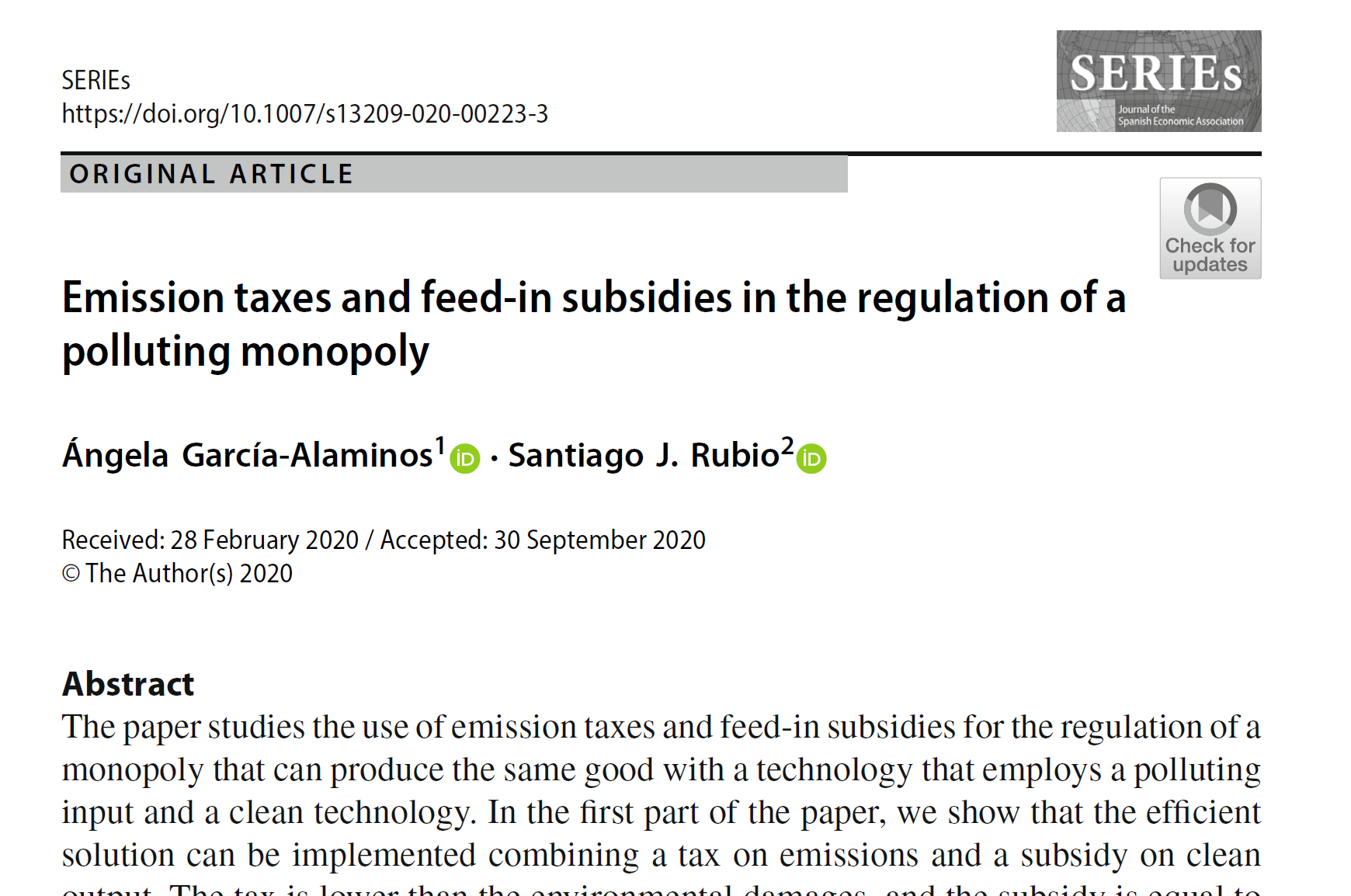
Santiago J. Rubio from the University of Valencia and GEAR Group member Ángela García-Alaminos have recently published a new research article entitled “Emission taxes and feed-in subsidies in the regulation of a polluting monopoly” in SERIEs – Journal of the Spanish Economic Association.

The paper studies and compares the use of emission taxes and feed-in subsidies for the regulation of a monopoly that can produce the same good with a technology that employs a polluting input and a clean technology. First, it is showed that the efficient solution could be implemented combining a tax on emissions and a subsidy on clean output. The second-best tax and subsidy are also calculated through a two-stage policy game between the regulator and the monopoly, concluding that the second-best tax rate can be the Pigouvian tax, but only if the marginal costs of the clean technology are constant. A linear-quadratic specification of the model is also developed, allowing for a comparison of both policy instruments.

This work was awarded the “Young Researcher in Energy Economics Prize» by Red Eléctrica de España and the Spanish Association for Energy Economics in January 2020.

We hope you enjoy it!

ACCESS TO FULL PAPER: LINK

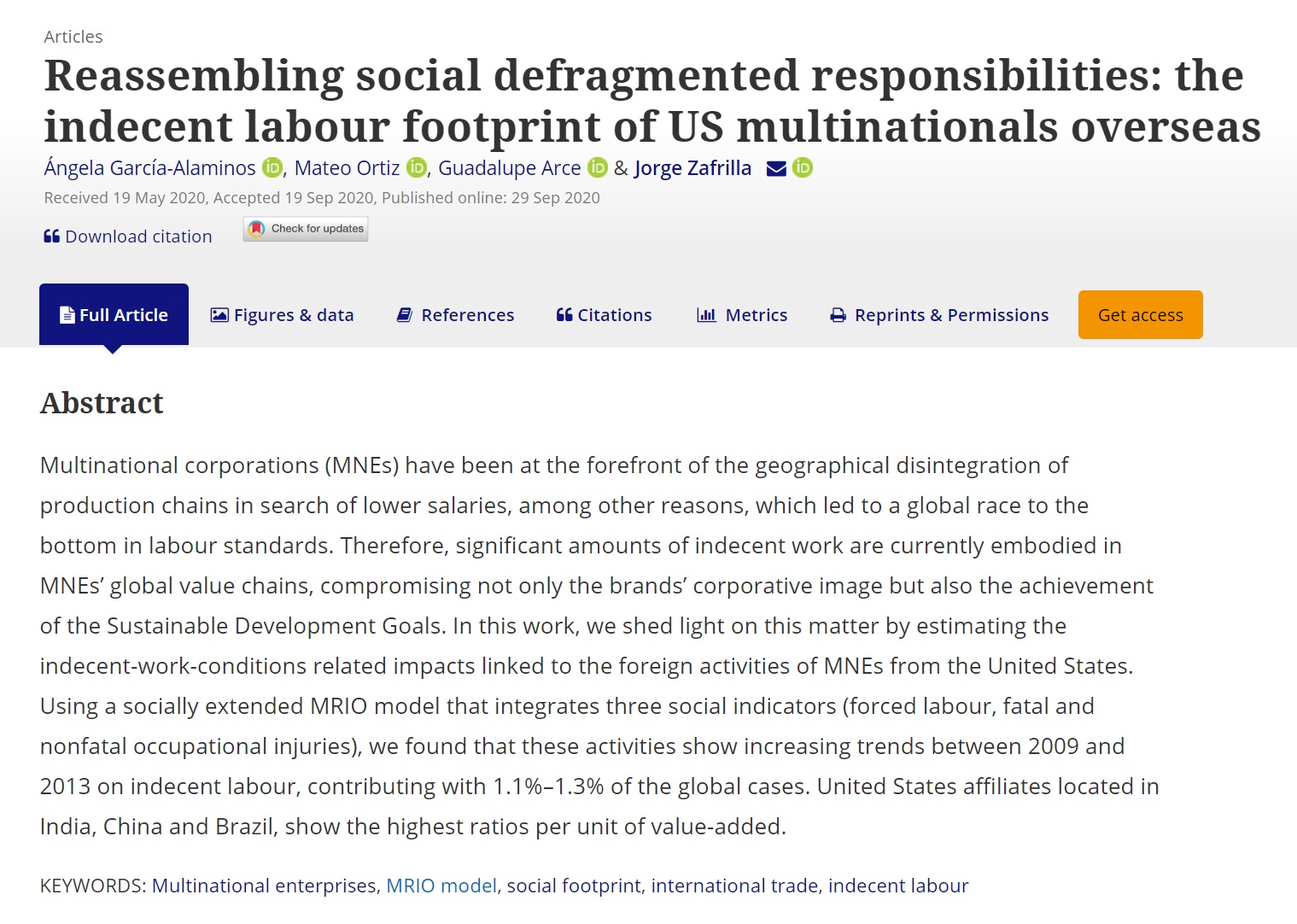
NEW PUBLICATION IN ECONOMIC SYSTEMS RESEARCH

GEAR Group members Ángela García-Alaminos, Mateo Ortiz, Guadalupe Arce, and Jorge Zafrilla have recently published a new research article in Economic Systems Research.

The paper, entitled “Reassembling social defragmented responsibilities: the indecent labour footprint of US multinationals overseas”, presents news insights about the social impacts embodied in multinational firms’ global value chains.  Combining a  socially extended MRIO model with three social indicators (forced labour, fatal and nonfatal occupational injuries) from the indecent labour database developed by Ángela García-Alaminos,  we find that the activities of US multinationals foreign affiliates show increasing trends between 2009 and 2013 on indecent labour, contributing with 1.1%–1.3% of the global cases. United States affiliates located in India, China, and Brazil show the highest ratios per unit of value-added.

This work was awarded the “6th Emilio Fontela Research Prize in Input-Output Analysis” by the Hispanic-American Input-Output Society (SHAIO) in September 2019.

We hope you enjoy it!

ACCESS TO FULL PAPER: LINK

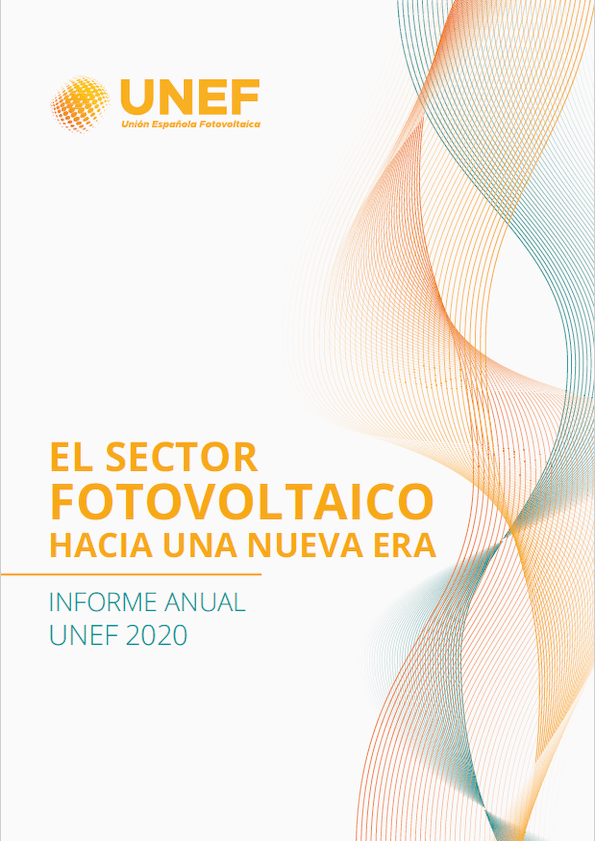
GEAR develops the photovoltaic sector macroeconomic report for the 2020 UNEF annual report

On 15 July, UNEF presented its annual report for 2020 entitled «The photovoltaic sector towards a new era» at a virtual press conference.

This report, which reviews the situation of the sector at the national and international level, devotes a complete section to the analysis and evaluation of the main macroeconomic indicators of the sector. This section has been developed, for the third consecutive year, by the GEAR research group of the University of Castilla-La Mancha (UCLM).

Some of the main data in the report place the Spanish photovoltaic sector as a leader at the European level and sixth worldwide.

The photovoltaic sector as a whole generates a direct impact on national GDP of 3,220 million euros (0.26% of total GDP) and a total of 58,699 jobs considering direct, indirect, and induced employment.

Access all the information and the complete report from https://unef.es/2020/07/el-espectacular-crecimiento-conseguido-en-2019-posiciona-al-sector-fotovoltaico-como-un-motor-de-la-recuperacion-economica/

NEW CHAPTER PUBLISHED

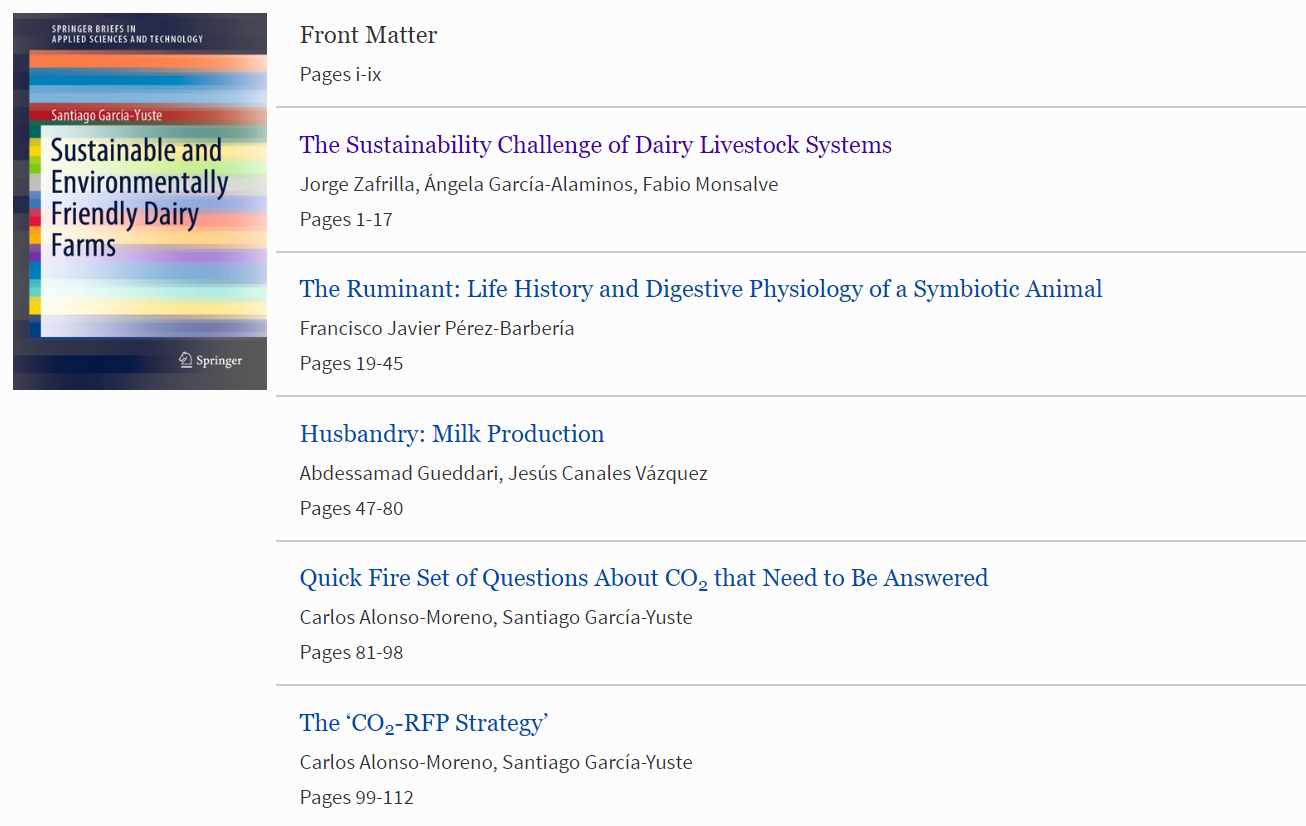
GEAR Members Jorge Zafrilla, Ángela García-Alaminos, and Fabio Monsalve have recently published a new book chapter. You can find “The Sustainability Challenge of Dairy Livestock Systems” inside the book Sustainable and Environmentally Friendly Dairy Farms, edited by Santiago García-Yuste, it is part of the SpringerBriefs in Applied Sciences and Technology book series.

The book, Sustainable and Environmentally Friendly Dairy Farms, presents an innovative environmental proposal. While chiefly focusing on dairy farms, the environmental solution it describes applies to the entire livestock sector. This book is divided into five chapters elaborated by eight authors. The first chapter -written by the GEAR members listed above – describes the current situation of the global dairy livestock industry under the influence and challenge of the commitments of the so-called Paris Agreement and addresses the carbon footprint of dairy farms. Firstly, the key points of the Agreement affecting the livestock and dairy systems are discussed within the framework of the Sustainable Development Goals. Next, a detailed analysis of the evolution of the activity and the greenhouse gas emissions of the industry is presented. Finally, a summary of current environmental solutions and bioeconomy alternatives will contribute to enriching the discussion.

This contribution is part of the collaboration of the GEAR group in a UCLM’s multidisciplinary research group. Together with chemists and engineers, who are working on techniques for the capture and use of CO2.

LINK to the ebook: https://link.springer.com/book/10.1007/978-3-030-46060-0