Some members of the GEAR
Group have recently published a new research article in PLOS ONE.
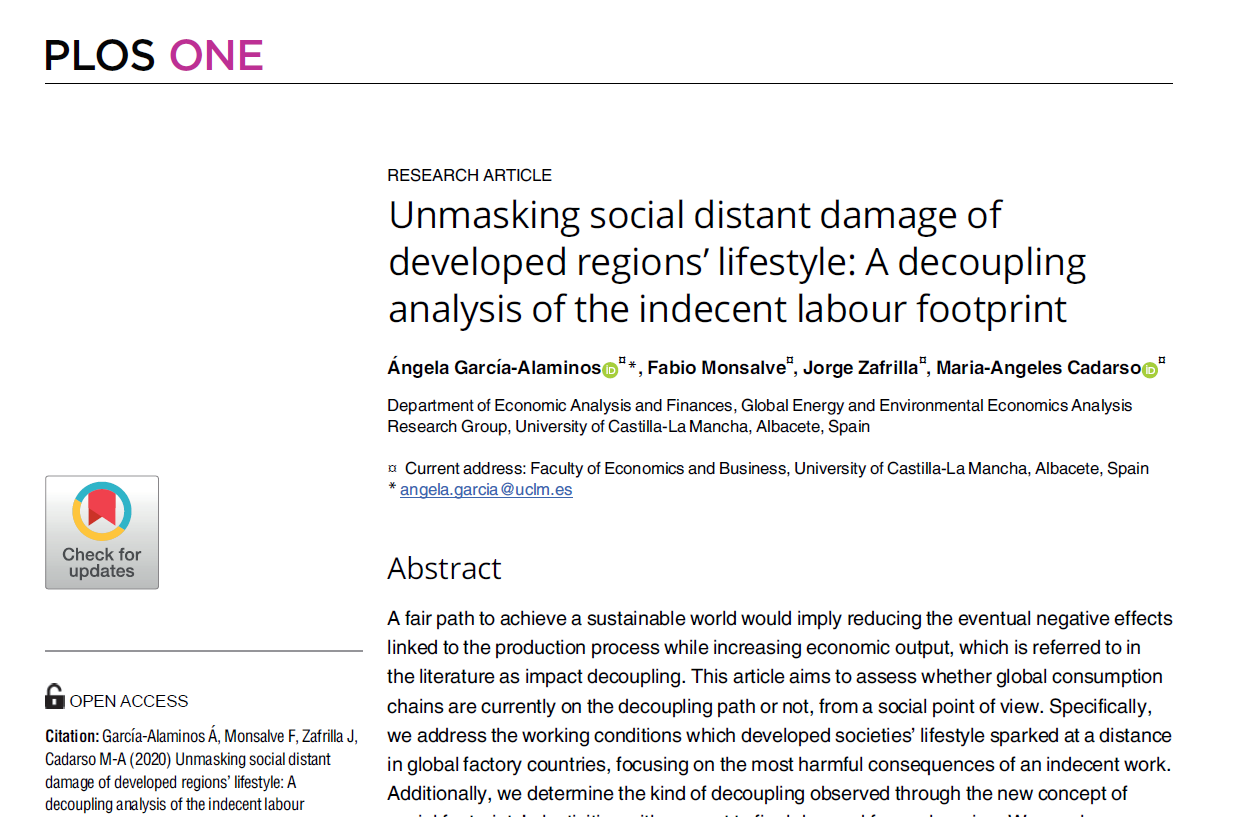
The paper, entitled “Unmasking social
distant damage of developed regions’ lifestyle: A decoupling analysis of the
indecent labour footprint” presents news insights about the indecent labour
footprints. Using the indecent labour database developed by Ángela García-Alaminos
to assess the indecent labour footprint, we propose a decoupling analysis to evaluate
whether global consumption chains are currently on the decoupling path or not, from
a social point of view.
The paper has been written by
Ángela García-Alaminos, Fabio Monsalve, Jorge Zafrilla and María Ángeles
Cadarso.
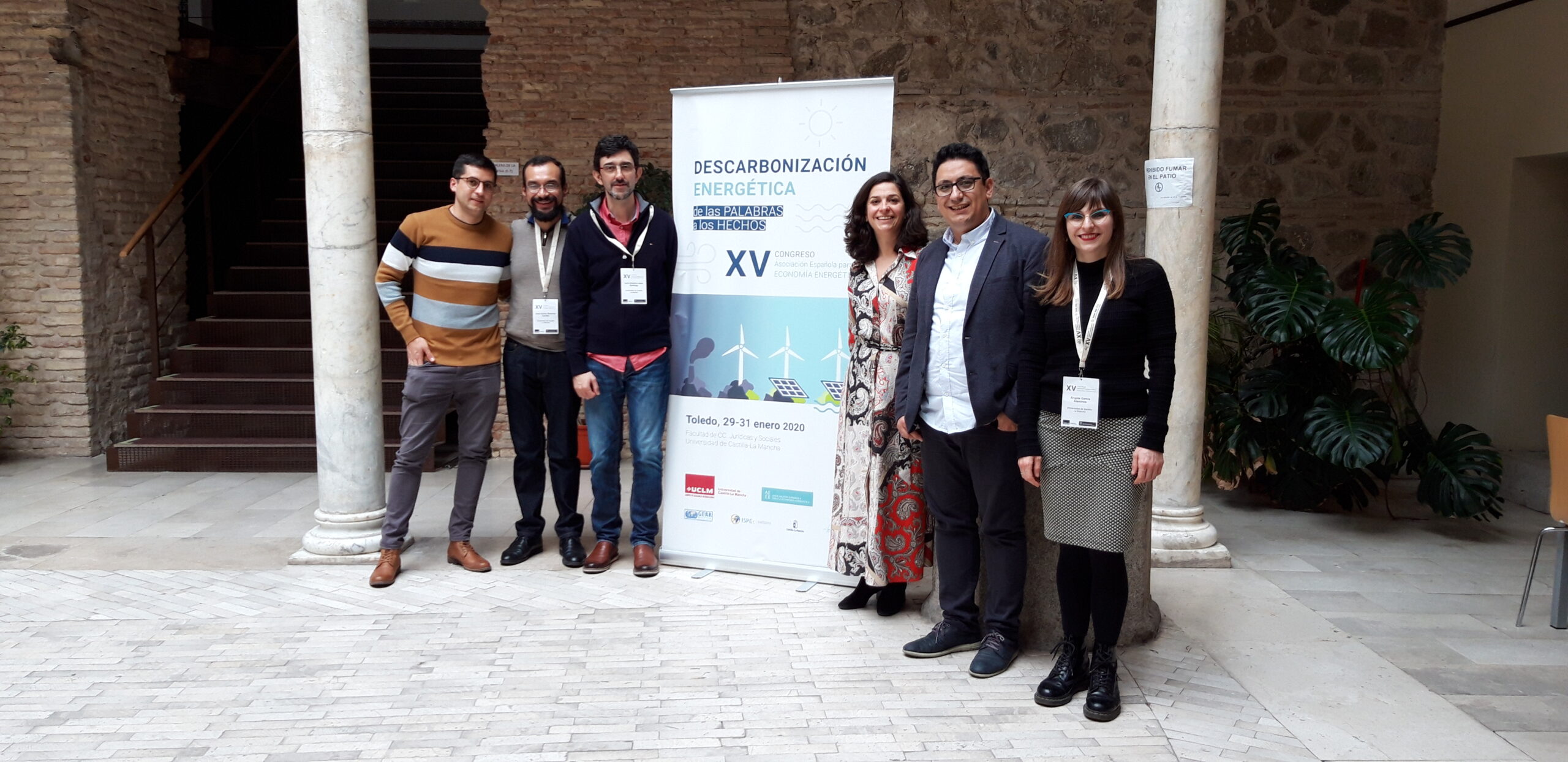
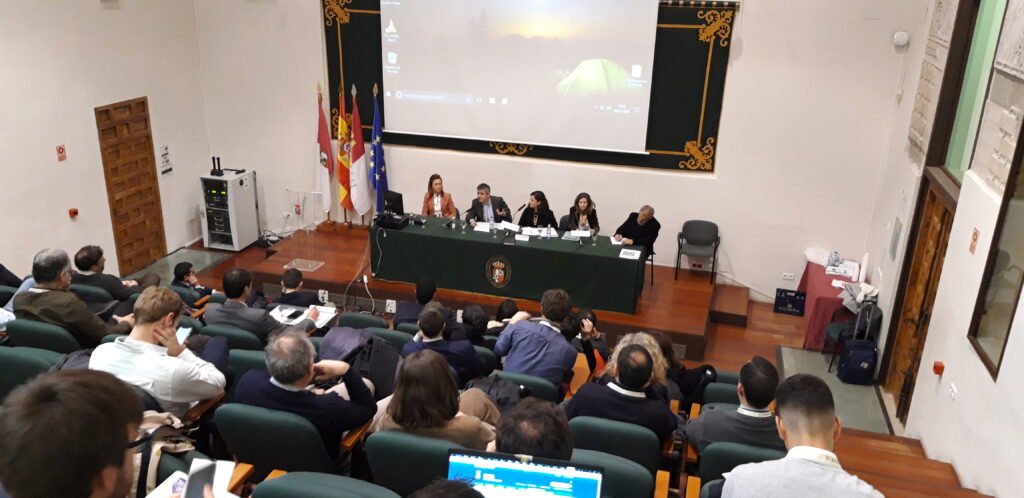
The 15th
Conference of the Spanish Association for Energy Economics (AEEE) was held at
the University of Castilla-La Mancha, at the lovely city of Toledo, from 29th
to 31st January 2020.
Since our University would be
hosting the event, some GEAR members led the organization of the 2020 edition
of the conference in close collaboration with Leticia Blázquez, from the UCLM’s
Talavera and Toledo Campuses. All together worked hard to successfully ensure a
wonderful conference for all the attendees and speakers.
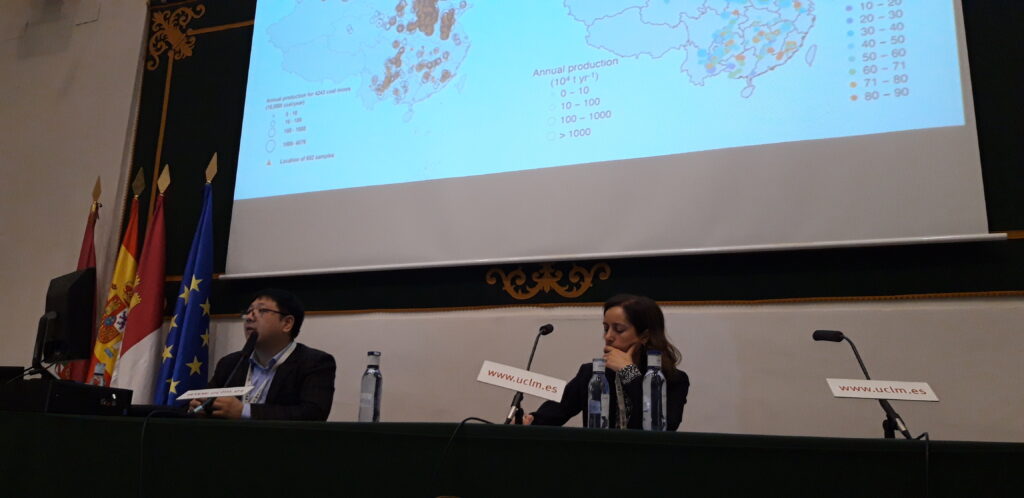
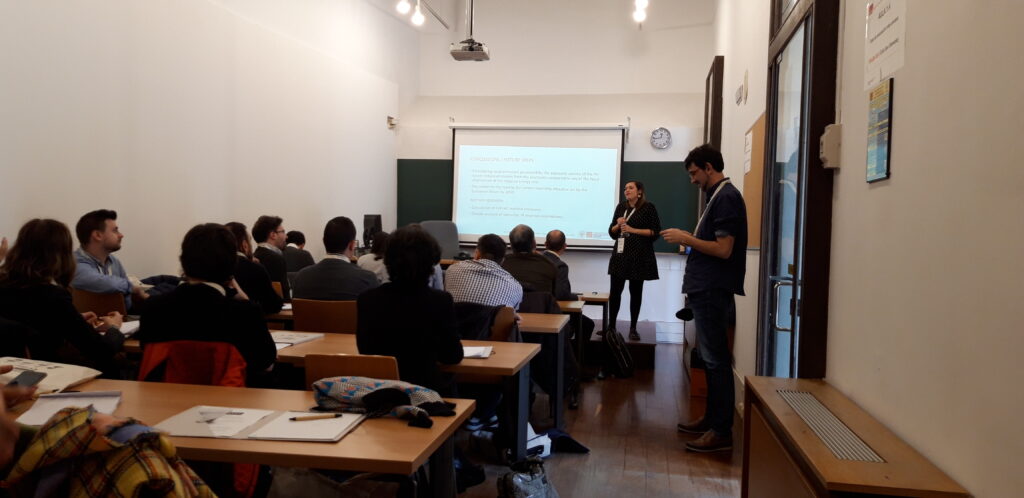
GEAR members participated
not only as organizers but also as speakers in the academic sessions of the
conference. The research works presented by GEAR members at the conference
were:
«Emission Taxes, Feed-in Subsidies and the Investment in a Clean Technology by a Polluting Monopoly». García-Alaminos, A., and Rubio, S. J.
«Unequal rural and urban household carbon footprint in Spain and the impact of carbon taxation», Tomás, M. Á., López, L.A. and Monsalve, F.
«The carbon footprint of Spain’s photovoltaic industry». Zafrilla, J.; Arce, G. and Monsalve, F.
«Environmental and economic impacts of Brexit in the consumption of vegetables and fruits in the UK», López, L.A., Tobarra, M.A., Carrascal, A. and Ortega, R.
«Towards energy transition: sustainability assessment of a hybrid solar thermal – Biomass gasifier power plant in Tunisia». Banacloche, S., Herrera, I. and Lechón, Y.
«Triple bottom line analysis of the Spanish solar photovoltaic sector: A footprint assessment». Zafrilla, J., Arce; G., Cadarso, M.-Á., Córcoles, C.; Gómez, N., López, L.-A., Monsalve, F. and Tobarra, M.-Á.
«Economic and environmental impacts of decarbonization through a hybrid MRIO multiplier-accelerator model», Dejuan, O., Ortiz, M. and Portella-Carbó, F.
«The European Union’s carbon emissions under the control-based criterion». Ortiz, M., López, L.A., and Cadarso, M.A.
«Viabilidad económica y medioambiental de la estrategia de ecoinnovación “CO2-AFP Strategy”». Gueddari, A., Zafrilla, J., García-Yuste, S., Alonso-Moreno, C., Canales-Vázquez, J. Paper awared with the best flash session prize of the conference. Congrats Abde!
Inter-institutional research project: «Red Temática de Modelización Energética para una Transición Energética Sostenible (MENTES)». Coordinated by Cadarso, M.A. and presented by Arocena, P.
Reaffirming
our commitment to the environment and sustainability, the GEAR group promoted a
sustainable conference from the organization and did our best to get the
provisions needed during the conference from eco-friendly suppliers. Moreover,
we assessed the carbon footprint of the event and found that it reached 10.2
tonnes of CO2, approximately. The estimate covered all the direct and indirect
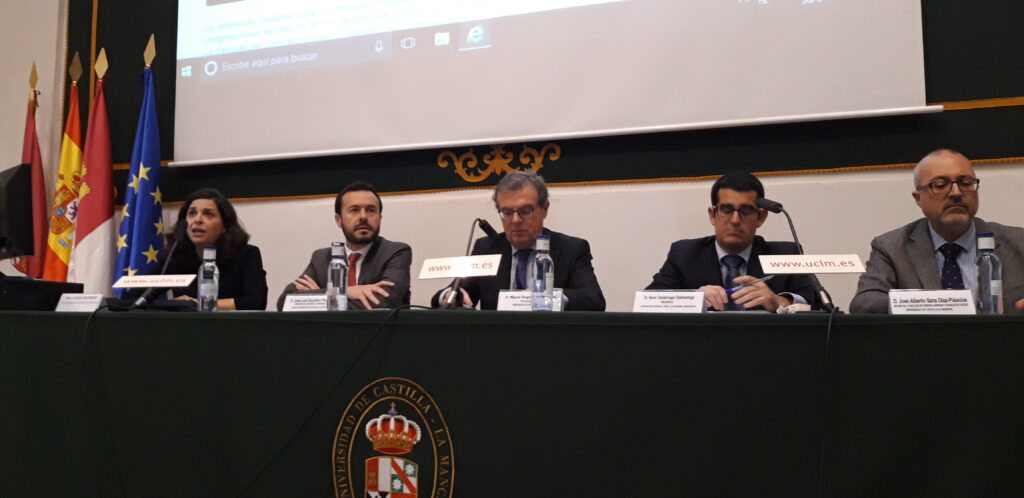
carbon emissions generated in the organization and by all attendees. These
findings were presented at the closing ceremony, where it was announced that
the conference’s carbon footprint would be totally compensated by the Vice-rectorate
for Research of the University of Castilla-La Mancha (UCLM).
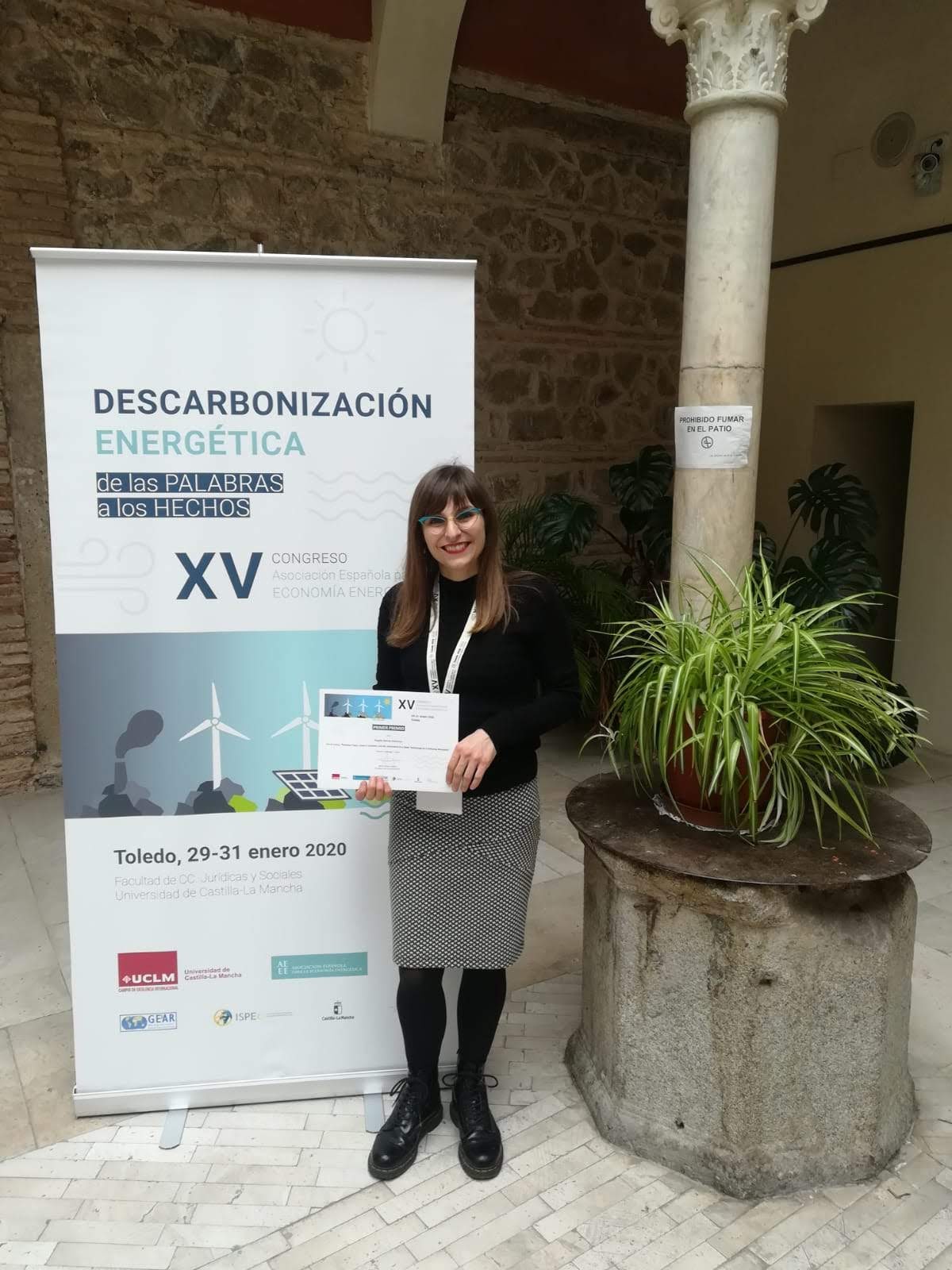
Finally, we
also want to highlight the remarkable achievements reached by two GEAR young
members, Ángela García-Alaminos and Santacruz Banacloche, who received two of
the Energy Economics Young Researchers Awards of the conference. Santacruz
obtained a travel grant for his outstanding work and Ángela was awarded the 1st
Prize for Young Researchers for the article with the highest quality and relevance in the field of
Energy Economics.
Congratulations
to Ángela and Santacruz for their prizes and all GEAR members and Leticia
Blázquez for making possible such a great conference!
The GEAR member Ángela
García Alaminos and Dr. Santiago J. Rubio from the University of Valencia have
received the «Prize for
Energy Economics Young Researchers» for their work Emission
Taxes, Feed-in Subsidies and the Investment in a lean Technology by a Polluting
Monopoly. This distinction has been awarded by Red Eléctrica de
España, and the Spanish Association for Energy Economics (AEEE) within the15th
Conference of the Spanish Association for Energy Economics held in Toledo on
the 29th-31st of
January 2020.
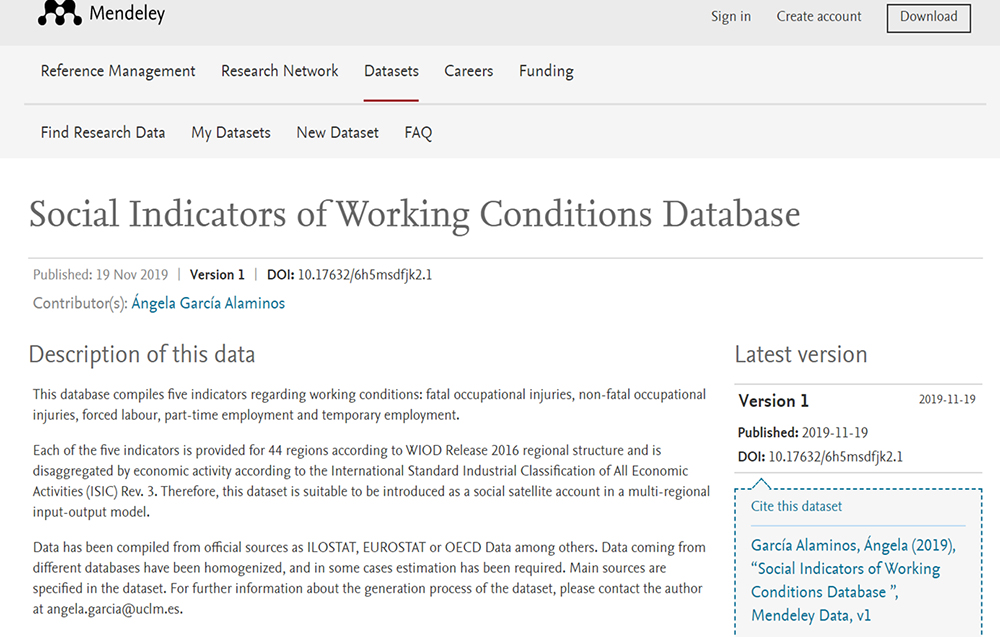
GEAR member Ángela García Alaminos has recently published in an open repository a “Social Indicators of Working Conditions Database”. This database compiles five indicators regarding working conditions: fatal occupational injuries, non-fatal occupational injuries, forced labor, part-time employment, and temporary employment. Each of the five indicators is provided for 44 regions and disaggregated by economic activity, which makes this dataset a social satellite account suitable with multi-regional input-output models.
Main sources are specified in the dataset.
For further information about the generation process of the dataset, please
contact the author at angela.garcia@uclm.es.
The database can be found in Mendeley Data (http://dx.doi.org/10.17632/6h5msdfjk2.1) under CC BY 4.0 Licence. To use the data, please cite García-Alaminos, Ángela (2019), “Social Indicators of Working Conditions Database ”, Mendeley Data, v1.
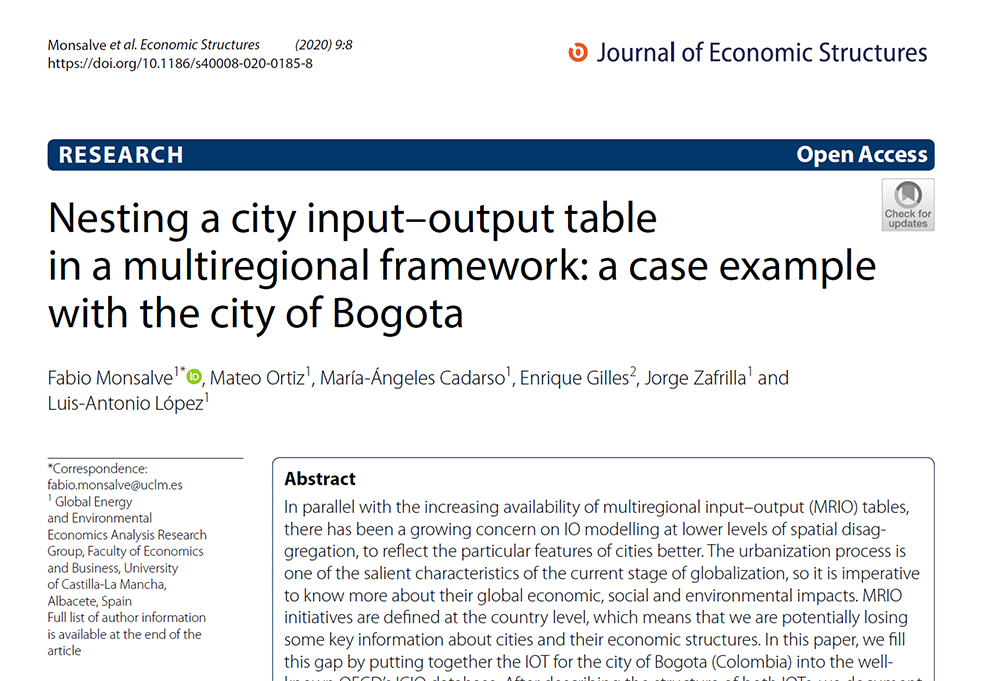
The GEAR Group has recently published our’s first contribution developed in collaboration with Enrique Gilles, Faculty of Business, Finance, and Economics EAN University Bogota, Colombia.
The paper, entitled “Nesting a city input–output table in a multiregional framework: a case example with the city of Bogota” presents a novel contribution in the field input-output developments for cities. First, we propose the nesting of the Bogota IO table in an MRIO model with Colombia and the rest of the countries presented in the OECD database. Second, we develope an evaluation of the role of the city of Bogota throughout the Global Value Chains.
We hope this is the first contribution of a productive collaboration with Enrique.