Archivo de la categoría: News

The difficult process of learning to “speak the language of power”

https://www.eeas.europa.eu/eeas/difficult-process-learning-speak-language-power_en (Servicio Europeo de Acción Exterior)


In a 29 November 2024 blog post, former EU High Representative Josep Borrell reflects on his five-year mandate and argues that the European Union must learn to “speak the language of power” if it is to defend its interests effectively in a more dangerous and multipolar world. He notes that while the EU has strong institutions and normative power, it too often lags in agility, coherence and strategic action. (Servicio Europeo de Acción Exterior)
Though the article is about geopolitics and power, it touches on language in a metaphorical but meaningful way—and links to our interest in multilingualism in several ways:

  • The notion of “speaking the language of power” reminds us that language is not only a matter of communication, but also of agency, representation and influence. Multilingualism matters because if you cannot “speak the language” of institutions, you may be excluded from decision-making, from representation, or from the ability to shape policy.
  • In the context of EU multilingualism, this implies that having many languages (and the capacity to use them) is not merely symbolic: it is part of the infrastructure of power, legitimacy and participation. Member states and citizens whose languages and voices are less present may find themselves outside the circles of influence.
  • For professional fields (translation, localisation, language policy, multilingual education): if the EU is to strengthen its voice globally, the language-skills ecosystem inside the EU (including translation/interpreting, multilingual education, language technology) must be robust. Multilingual professionals become part of the “language of power” the EU needs.
  • The article also indirectly raises questions about resource allocation, institutional structures, and how multilingual practices are embedded in governance. If the EU wants to act with power, the behind-the-scenes language infrastructure (translation, interpretation, multilingual staff, digital multilingual systems) must align with that ambition.
  • Finally, from a policy-perspective: there is a gap between rhetoric (“Europe should speak with one strategic voice”) and practice (“member states still operate in 24+ languages, institutional delays, translation burdens”). Bridging that gap requires foresight, investment and professionalisation—precisely the domains our modules explore.
  1. What do you interpret by “speaking the language of power” in the context of European institutions? Is it literal (languages, translation) or metaphorical (strategic discourse, influence)?
  2. In what ways does multilingualism enhance or hinder an institution’s power and agility? Could fewer languages be more efficient? Or is multilingualism itself a strategic asset?
  3. If you were designing a professional-training module for multilingual staff in the EU (translation/localisation/education), what skills would you prioritise to ensure that Europe can “speak the language of power”?

Would love to hear your take!

Spain grants Basque, Catalan and Galician languages parliamentary status

(https://www.theguardian.com/world/2023/sep/19/spain-grants-basque-catalan-and-galician-languages-parliamentary-status)

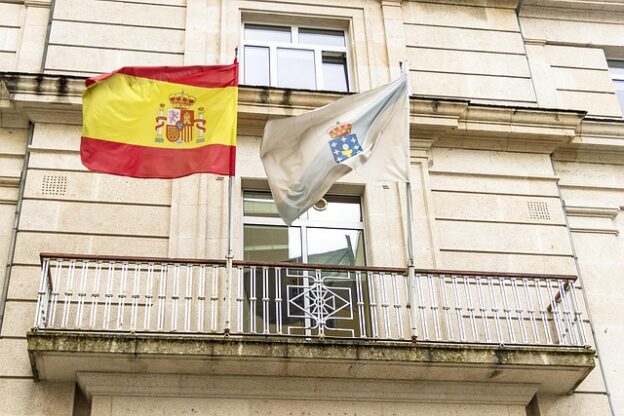
On 19 September 2023, Spain’s national parliament approved a reform allowing MPs to speak in the regional languages Basque, Catalan and Galician during debates — alongside Spanish. The change was part of a deal by the caretaker government to secure support from Catalan and Basque-region parties following an inconclusive election. The reform came with the promise of translation and interpretation systems. Some opposition parties, including the far-right, walked out in protest. The article notes that Spain continues to push these languages for recognition at EU level, yet faces resistance from other Member States over costs and precedent.
This is a noteworthy shift: from regional co-official languages being used locally and in autonomous community institutions to being formally recognised at the national legislative level. It signals a step in the “normalisation” of these languages in Spain’s public and political life.

From a European multilingualism viewpoint, a few aspects stand out:

  • The move reflects the institutional recognition of linguistic diversity within a state: by enabling Basque, Catalan and Galician in national parliament, Spain is acknowledging that Spanish alone does not suffice for the full political representation of its multilingual society.
  • However, the bump-up from national to EU level is yet uncertain: Spain is also pushing for these languages to become official in the European Union, but as the article shows others are wary. This illustrates the gap between “recognition in national law” and “recognition in supranational institutions”.
  • From the perspective of translation, localisation and language professions: if these languages gain more institutional recognition (national + EU), then the demand for high-quality translation, interpreting, terminological corpora and multilingual digital services will grow. The fact that Spain promises to fund translation costs adds a concrete professional dimension: the shift is not purely symbolic.
  • There is also the risk of precedent effects: as countries grant greater status to regional/minority languages, the institutional costs (translation, interpreting, published materials, digital services) mount. Other EU states and institutions are sensitive to this.
  • Politically, the change is entangled with power-sharing deals and party support. That means language recognition is not only cultural/educational, but deeply political. Recognition can follow negotiation leverage, rather than pure linguistic rights logic.
  1. What do you make of the idea that regional languages like Basque, Catalan and Galician are being empowered at national level? Does this strengthen or fragment national cohesion in your view?
  2. If these languages were recognised at EU level, what professional or educational opportunities (translation, localisation, terminology, digital services) might open up — and what obstacles might appear?
  3. Do you think recognition of languages in institutions should be driven by speaker numbers, historic use, identity politics, or economic/technical viability? Which criteria matter the most?

Would love to hear your perspectives!

España se ofrece a pagar los costes de hacer oficial en la UE el catalán, el euskera y el gallego

(https://elpais.com/espana/2023-09-15/negociaciones-de-investidura-y-formacion-de-gobierno-en-directo.html)

On 15 September 2023, El País reported that Spain announced its willingness to assume the translation and interpretation costs required for recognising three of its co-official languages—Catalan, Basque (Euskera) and Galician—as official languages of the European Union. This proposal was tabled ahead of a meeting of EU ministers (Council of General Affairs) in Brussels. However, more than half of the EU member states raised concerns in preparatory sessions: they asked for more time to examine the legal, procedural and budgetary implications of expanding the number of official languages (then 24) and were reluctant to risk setting a precedent that might trigger many similar demands across Europe.

This development is particularly interesting for several reasons:

First, it shows how linguistic recognition and politics are tightly bound: Spain not only asserted the cultural-political importance of its co-official languages, but offered to pay the associated cost. That turns a symbolic request into a concrete institutional one, raising the stakes.

Second, from a multilingual EU perspective, the proposal reveals the tension between identity/recognition and institutional practicality. Expanding official languages means more translation, more interpretation, more administrative infrastructure—members rightly ask: where does it stop? Which languages qualify? How many? The fact that several countries prefer to delay rather than deny shows the complexity.

Third, for professional fields linked to translation, localisation and multilingual policy, this could be significant: if Catalan, Basque and Galician become official in the EU, we might expect growth in translation/localisation demand, terminological work, multilingual technologies tailored to those languages—especially given Spain’s willingness to carry the cost burden.

Finally, this case also acts as a mirror for lesser-used and regional languages elsewhere in Europe: if a large state like Spain puts forward this kind of proposal, what does it say about the prospects for other regional languages or minoritized languages? And how will EU institutions respond to the balance between linguistic diversity and administrative efficiency?

  • Would you support the recognition of Catalan, Basque and Galician as official EU languages if you were making the decision? Why or why not?
  • In your country or region, are there languages that could make a case for official EU status? What would be the barriers?
  • From a practical perspective, what do you think is the greatest obstacle to expanding official languages in the EU: cost, precedent-setting, technical resources, or something else?

Looking forward to your thoughts!

Two in three state secondary schools in England teach just one foreign language

(https://www.theguardian.com/education/2023/jun/29/two-in-three-state-secondary-schools-in-england-teach-just-one-foreign-language)

The Guardian reports that two-thirds of state secondary schools in England now offer only one foreign language to all pupils at Key Stage 3 (11–14). German is the biggest casualty of this contraction: it is taught in barely a third of state schools. Meanwhile independent schools still maintain a wider linguistic repertoire. Teacher shortages, underfunding, and a long feedback-loop of low take-up → less provision → even lower take-up seem to be driving the squeeze. The UK government has launched new “Language Hubs” to try to reverse the trend, but the scale looks small compared to the structural slide.

Seen in a post-Brexit frame, the picture is even more ironic. Brexit was rhetorically framed as a way to “go global”; logically, that should have made more multilingual competence essential. But the schooling data suggest the opposite dynamic: a shrinking linguistic horizon, a kind of quiet monolingualisation inside the very society that now needs multiple linguistic bridges to navigate non-automatic international mobility.

In the EU, English still functions as lingua franca; but in England, plurilingual capacity is weakening. That divergence is one of the most curious symptoms of the post-Brexit era: Europe remains structurally multilingual, but England is increasingly socially structured for “one foreign language is enough”. For language education, policy, translation/localisation professions and future intercultural labour markets, this is not a trivial development. It is a structural one — and it will shape who can actually participate globally, beyond slogans.

What do you think is driving this? Is this a temporary post-Covid teacher-shortage artefact — or a deeper shift in how England imagines languages? And is Brexit pushing the UK towards the world economically — or away from its languages?

More Irish-language news from Brussels

Following the language’s new full official + working status in the EU, The Irish Times reports that Irish-speakers are suddenly in demand, not only in Luxembourg and Brussels, but even in recruitment campaigns based in Greece. It’s a real example of how language status becomes labour-market reality almost instantly: jobs don’t just symbolically recognise multilingualism: they begin to require it.

Full article here:
https://www.irishtimes.com/news/world/europe/irish-speakers-in-demand-in-brussels-and-even-in-sunny-greece-1.4769658

There will be more to say about all this; but for now, it’s simply exciting to see multilingual identity + policy shifts translating straight into professional openings in Europe.

Big multilingualism milestone alert!

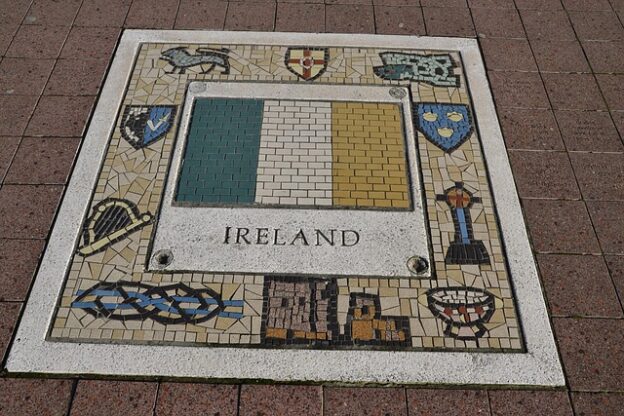
Irish has finally become a fully official and working language of the European Union, which means that from now on Irish gets translated like any other EU language, not just in a limited / derogated sense. It’s a major symbolic moment and a very practical one: Irish is now truly sitting at the same table as the rest.

If you want the story straight from a trusted newspaper, here is the piece:

Irish gains full official and working status in the EU
https://www.irishtimes.com/news/ireland/irish-news/irish-gains-full-official-and-working-status-in-the-eu-1.4767303

This is the kind of real-world case we love to talk about: identity, recognition, language rights, and the sometimes slow but real institutional change in Brussels.

And yes: you can already imagine the consequences in translation, terminology, subtitling, authorship, recruitment, training, digital resources, etc.

Short version: multilingual Europe just got a tiny bit more multilingual.

El español reclama su lugar en la ciencia y la tecnología

(https://elpais.com/tecnologia/2022-12-04/el-idioma-espanol-en-la-ciencia-y-la-tecnologia.html)

An article published on 4 Dec 2022 in El País highlights how Spanish-speaking countries are mobilising to change the long-standing dominance of English in science and tech. The piece reports that Spain is leading a €1.1 billion public investment (via the strategic plan “Alianza por la Nueva Economía de la Lengua”) to promote Spanish and co-official languages in five key areas: knowledge production in Spanish, AI in Spanish, science in Spanish, learning in Spanish, and cultural & creative industries. The article also emphasises how although Spanish is the second most frequent language in scientific output, its visibility is still very low: almost all high-impact experimental science is published in English (or increasingly Chinese). Spanish remains overrepresented in humanities, social sciences and medical fields, but less so in lab-based disciplines. It also stresses that linguistic inclusion in digital technologies is a matter of both justice and economic opportunity: if Spanish is left out of the AI, cloud and translation ecosystem, the gap with English and other major languages will widen.

This is a timely piece that speaks directly to our interests in multilingualism, identity and language policy. A few reflections.

  • The move to treat Spanish (and by extension other less-dominant languages) as strategic assets in science & tech is refreshing. It shifts the narrative from “we must learn English” to “our languages also have value and deserve representation”.
  • It’s interesting to see how the article links language to economics and technology: not only: culture and identity, but also market share, AI datasets and international competitiveness. That gives the language-policy issue more traction.
  • Yet, the structural dominance of English remains huge in experimental science. As the piece says: 99% of the publications from top research centres in Spain still go through English. That means the transformation will require long-term commitment, not just funding.
  • For our work in translation/localisation and in language education: this suggests a growing field of opportunity. If Spanish becomes more embedded in AI, data, tech production, there will be demand for terminological expertise, multilingual corpora, machine-learning in Spanish, etc.
  • One caveat: the article doesn’t go deeply into how languages other than Spanish (e.g., co-official languages in Spain, regional identities) will fit. It mentions them, but the operational implications are less clear.
  • Finally, from a European-multilingualism perspective: this case shows that even large global languages (Spanish) can feel “minor” in the tech/science ecosystems. So for truly minor or regional languages the challenge is even steeper — but the logic remains: visibility, presence and capacity in technology/digital matter more than ever.

In conclusion, the Spanish-language science & tech ecosystem is at a turning point. The push here offers both a symbolic and practical shift in language policy. For anyone working on language education, translation, multilingual tech or European language policy, this is worth watching. Not only the ‘what’ (spanish = asset) but the ‘how’ (investment, digital tech, terminologies) will matter.

Let me know what you think: Do you see opportunities in your field maybe changing because of this? Or perhaps comparators in other European languages you know?