(https://elpais.com/espana/2023-09-15/negociaciones-de-investidura-y-formacion-de-gobierno-en-directo.html)
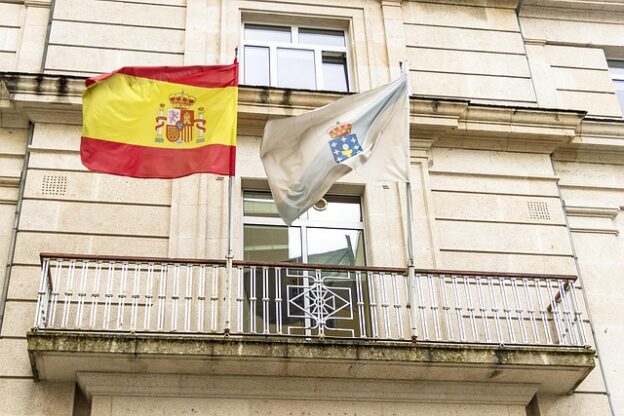
On 15 September 2023, El País reported that Spain announced its willingness to assume the translation and interpretation costs required for recognising three of its co-official languages—Catalan, Basque (Euskera) and Galician—as official languages of the European Union. This proposal was tabled ahead of a meeting of EU ministers (Council of General Affairs) in Brussels. However, more than half of the EU member states raised concerns in preparatory sessions: they asked for more time to examine the legal, procedural and budgetary implications of expanding the number of official languages (then 24) and were reluctant to risk setting a precedent that might trigger many similar demands across Europe.
This development is particularly interesting for several reasons:
First, it shows how linguistic recognition and politics are tightly bound: Spain not only asserted the cultural-political importance of its co-official languages, but offered to pay the associated cost. That turns a symbolic request into a concrete institutional one, raising the stakes.
Second, from a multilingual EU perspective, the proposal reveals the tension between identity/recognition and institutional practicality. Expanding official languages means more translation, more interpretation, more administrative infrastructure—members rightly ask: where does it stop? Which languages qualify? How many? The fact that several countries prefer to delay rather than deny shows the complexity.
Third, for professional fields linked to translation, localisation and multilingual policy, this could be significant: if Catalan, Basque and Galician become official in the EU, we might expect growth in translation/localisation demand, terminological work, multilingual technologies tailored to those languages—especially given Spain’s willingness to carry the cost burden.
Finally, this case also acts as a mirror for lesser-used and regional languages elsewhere in Europe: if a large state like Spain puts forward this kind of proposal, what does it say about the prospects for other regional languages or minoritized languages? And how will EU institutions respond to the balance between linguistic diversity and administrative efficiency?
- Would you support the recognition of Catalan, Basque and Galician as official EU languages if you were making the decision? Why or why not?
- In your country or region, are there languages that could make a case for official EU status? What would be the barriers?
- From a practical perspective, what do you think is the greatest obstacle to expanding official languages in the EU: cost, precedent-setting, technical resources, or something else?
Looking forward to your thoughts!